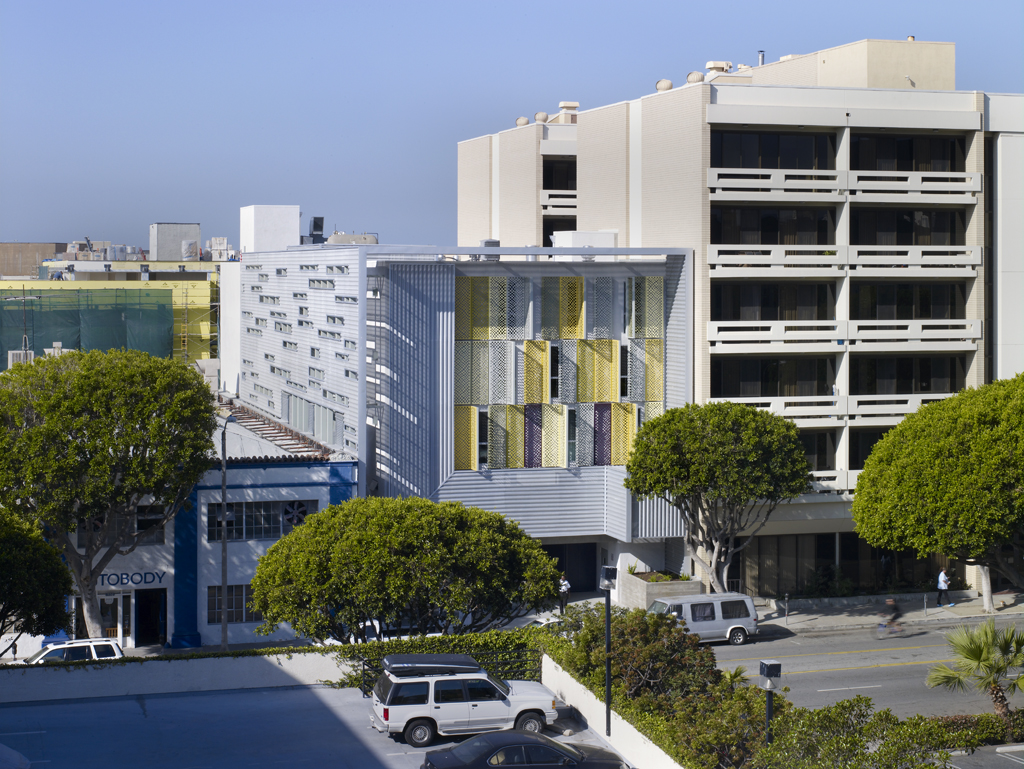
Santa Monica is racing to build thousands of housing units even as Los Angeles County posts the largest population loss of any county in the nation.
LA County lost 54,000 residents from July 2024 to July 2025, according to Census Bureau data reported by the Los Angeles Times. The California Department of Finance attributed the decline to higher domestic out-migration linked to the January 2025 Palisades and Eaton wildfires and a significant drop in net international migration. Statewide, California shed about 54,000 people from January 2025 to January 2026, with net legal immigration cut roughly in half, the San Francisco Chronicle reported.
Yet the city's building pipeline keeps growing. At her July 24 State of the City address, Mayor Caroline Torosis highlighted the approval of nearly 1,800 new homes, including more than 450 permanently affordable units.
The state mandate driving the boom
The reason is Sacramento. California's Regional Housing Needs Allocation handed Santa Monica a sixth-cycle target of roughly 8,895 units for 2021–2029, more than five times the previous cycle's 1,674-unit goal, according to SM Observed. Cities that fail to plan for those numbers risk losing local zoning control, facing lawsuits and getting cut off from state funding.
Santa Monica got a taste of that pressure in 2023. After its Housing Element fell out of compliance, the city received 16 Builder's Remedy project applications that bypassed local zoning rules. The city settled with developers on 13 of those projects in May 2023, according to city development records.
What's in the pipeline
The city's approved Housing Element plans 1,880 affordable homes across five city-owned sites. The two largest: 707 affordable apartments at the five-acre Bergamot Station Arts Center and 331 affordable apartments at the 4th Street/5th Street/Arizona site, where Bank of America and Chase Bank leases generating $2.5 million annually for the General Fund expire in 2026.
Construction is already underway elsewhere. A 78-unit affordable complex at 1634 W. 20th Street near the E Line, serving households at 30–60% of area median income, is expected to finish by mid-2027. The $77.7 million Tierra Apartments project on 14th Street and Wilshire Boulevard will add 80 units of senior affordable housing, with 40 units reserved for households at 30% of median income through federal Project-Based Vouchers. The public parking lot at that site closed permanently June 28 to make way for construction.
A mixed-use complex on the former Pico Bowl site near Pico Boulevard and Third Street will include 19 deed-restricted affordable units alongside market-rate apartments. The council also adopted an Off-Site Affordable Housing Incentive Program on Jan. 13, allowing developers to consolidate required affordable units at separate locations.
Political pushback
Not everyone supports the pace. Councilmember Phil Brock, writing in an Aug. 6 op-ed for S.M.a.r.t. in the Santa Monica Mirror, called for organized resistance: "We must speak out as a united community against further density when Sacramento starts to assign the next RHNA allotments in 2028–2029."
That next allocation cycle, which would set housing targets beyond 2029, is expected to begin in 2028–2029.