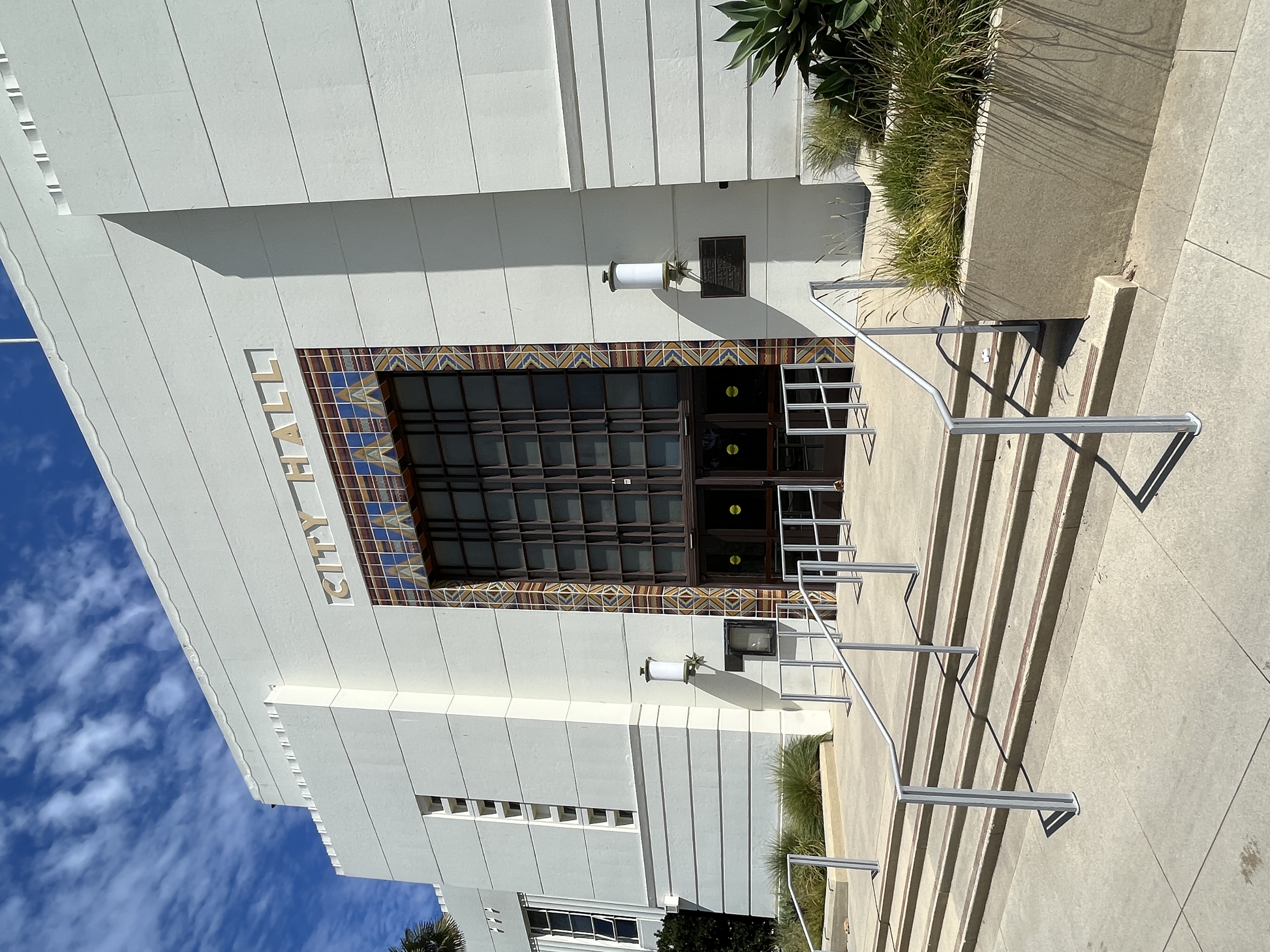
Santa Monica's City Council voted Sept. 22 to let buildings up to five stories replace 89 single-family homes in the Pico Neighborhood.
The 4-2 final approval of the upzoning ordinance clears the way for denser development on parcels in the Gandara Park area near the Expo/Bundy Metro E Line station. Mayor Pro Tem Jesse Zwick, who serves as Southern California director of the Housing Action Coalition, recused himself due to a conflict of interest.
Mayor Caroline Torosis and Councilmembers Ellis Raskin, Dan Hall and Barry Snell voted yes. Councilmembers Lana Negrete and Natalya Zernitskaya voted no.
The ordinance stems from SB 79, the Abundant and Affordable Homes Near Transit Act, which took effect July 1 and allows multi-family developments of up to five stories within half a mile of major transit stops. The Expo/Bundy zone was the only one of Santa Monica's seven transit-oriented development zones that lacked the housing density to qualify for a temporary exemption from the state law, according to the Santa Monica Lookout.
To earn that exemption, the council had to upzone enough parcels to meet SB 79's density threshold. The affected lots sit in a rectangle bounded by Interstate 10, Dorchester Avenue, Exposition Boulevard and Centinela Avenue.
Under the new rules, projects on those R1-zoned parcels may reach a floor-area ratio of 1.25 and a density of 40 units per acre, but only if they build to maximum density. Councilmember Raskin argued the ordinance actually limits what state law already permits, noting SB 79 allows 55- to 60-foot buildings in the zone while the city caps height at 28 feet. "So this is essentially a downzoning," Raskin said at the Sept. 23 meeting, according to the Santa Monica Daily Press.
Opponents see it differently. The Pico Neighborhood Association (PNA) wrote in a Sept. 18 open letter that the council treated the neighborhood as "this city's dumping ground for uses no one else wanted." In a separate Sept. 8 letter, the PNA noted the city needed only 52 additional parcels to meet the exemption threshold but chose to upzone 89. The group urged the council to adopt the Planning Commission's earlier recommendation to upzone 66 multi-unit parcels instead.
Former Councilmember Christine Parra, who said she owns one of the affected homes, wrote to Torosis that the neighborhood was not hers "to define."
Negrete, one of the two no votes, pointed to the area's history. The I-10 Freeway was routed through the Pico Neighborhood in 1958, displacing hundreds of mostly Black and Mexican American residents, according to the PNA letter.
"We have to look at things just beyond a map, and we're not looking at the historical harms in the way that we should be," Negrete said.
Torosis proposed an amendment directing staff to explore reducing the number of affected parcels, but several councilmembers cautioned residents not to expect changes. Hall said he did not want opponents "to get their hopes up that something might change in the future." Zernitskaya, who voted no, said the amendment "gives folks false hope" and said she would prefer staff spend time on more pressing matters.
City Attorney Heidi von Tongeln said she was not aware of the city ever zoning noncontiguous parcels and that the idea would need study.
Community Development Director Jing Yeo said the Expo/Bundy zone will be excluded from SB 79 requirements starting Oct. 23. That exclusion lasts until about October 2030, one year after the city adopts its next housing element. The city will send the ordinance to state housing officials for a 90-day review.
Three preliminary SB 79 applications had already been filed as of the Sept. 23 vote, Yeo said. One proposed project, unveiled at an Aug. 12 developer meeting, calls for a three-story, 10,000-square-foot building with five units at 2904 Delaware Ave. Another proposal combines SB 79 with the state Density Bonus Law to reach 12 stories, 32 units and 138 feet.