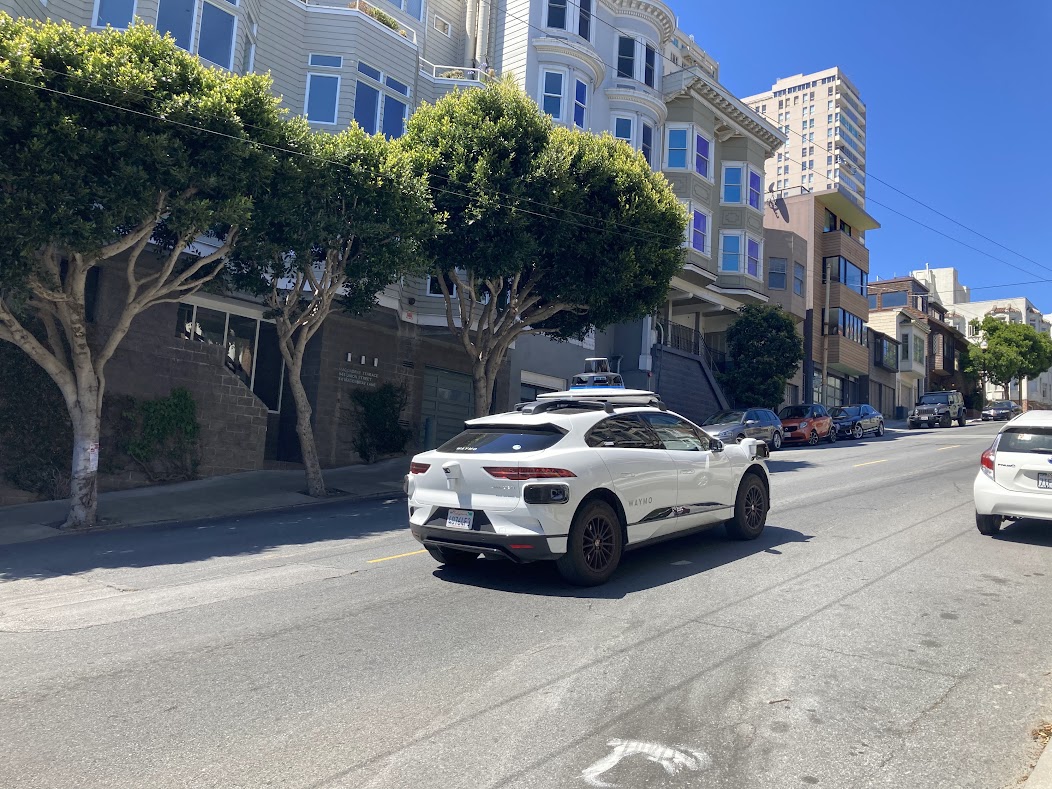
Residents living near Waymo's two Broadway charging lots in Santa Monica will get quieter nights after a judge ruled Monday, July 27, that the autonomous vehicle company's overnight operations constitute a public nuisance.
Los Angeles County Superior Court Judge Bradley S. Phillips issued a preliminary injunction barring Waymo from operating the facilities at 1222 and 1310 Broadway between 11 p.m. and 6 a.m. while the case heads toward trial, according to Westside Current.
"While the evidence shows that the parties have attempted to mitigate the noise, lights and traffic, it does not show that those efforts have been sufficiently successful to eliminate the public nuisance that is created," Phillips wrote in his ruling, as reported by City News Service.
The ruling hands Santa Monica an early legal victory in a dispute that has stretched since November 2024, when Waymo moved into the two former Ford dealership lots. The properties are owned by SMF Property Holdings LLC and operated by Voltera, which runs the charging equipment.
What residents described
Neighbors filed sworn declarations detailing the toll of round-the-clock operations. Victoria Benchuk, a single mother of an autistic 5-year-old, told the court that lot noise wakes her son two to four nights a week and he has trouble falling back asleep. She said the sleeping problems did not exist before the Waymo lot opened.
Paula Achter, 69, who works from home near the lots, said she had to change her sleeping habits and relocate her workspace within her apartment. Residents described the facilities in court papers as "mini-Las Vegas" and "a city that never sleeps." Complaints centered on beeping from vehicles backing in and out, strobe lights, and workers talking in the middle of the night. The city contended vehicle sounds "echo off buildings along the alleys like a canyon."
More than 300 Waymo vehicles pass through the Broadway neighborhood daily, The Samohi reported in May.
Waymo's response
Waymo denied a public nuisance existed. The company argued in court filings that it hired additional staff, implemented software updates to reduce noise, installed light and noise barriers, and modified vehicle behaviors in the area. Waymo also blamed residents for some disturbances, alleging that locals "stacking" vehicles caused a significant portion of the problems.
Before the ruling, Romy Ganschow, Santa Monica's chief deputy city attorney for the Consumer Protection Division, pushed back on that argument in a May 17 interview with The Samohi: "Waymo has chosen to respond to this lawsuit by blaming the victims. By saying they're the ones causing the problems, that a good portion of them have manufactured the problem. I don't think there's evidence of that."
Ganschow had previously said the city offered Waymo about eight to ten mitigation measures as an alternative to a full overnight shutdown, but Waymo called making cars circulate more broadly "too burdensome."
Santa Monica for Renters Rights also backed the city's request for injunctive relief in a letter to the court.
How the case got here
The City of Santa Monica filed a cease and desist order on November 19, 2025, demanding Waymo stop overnight charging. Waymo sued to block that order on December 17, 2025. The city filed its own lawsuit on December 24, 2025, declaring the stations a public nuisance (case number LASC # 25SMCV06581). In June 2026, Judge Phillips rejected a motion by landlord SMF Property Holdings to intervene as a defendant.
Phillips heard oral arguments on Wednesday, July 22, and took the case under submission before issuing Monday's ruling.
What comes next
The injunction is a pre-trial order. It does not resolve the underlying public nuisance case, which still must go to trial. No trial date has been set. The city confirmed the ruling in a press release on Tuesday, July 28. Waymo has not issued a public statement responding to the injunction.