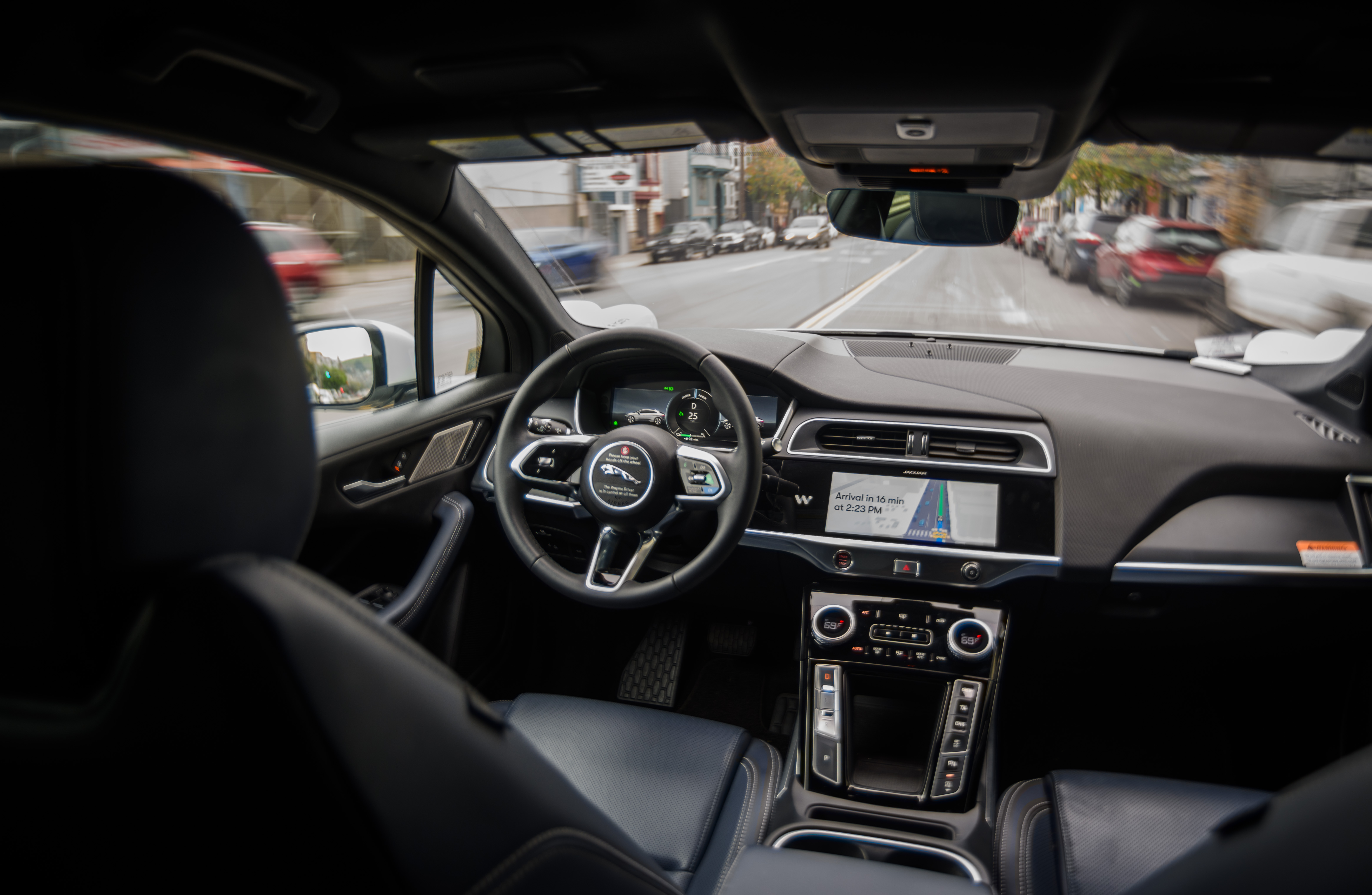
Waymo's driverless taxis crash far less often than human drivers on Los Angeles streets, according to a new Insurance Institute for Highway Safety report published Friday, July 24. But for Santa Monica residents, the headline statistic lands differently six months after one of those vehicles struck a child in a local school zone, with federal investigations into that crash still open.
The IIHS study compared state and federal crash data with Waymo's own incident reports across Los Angeles, Phoenix, San Francisco, and Austin. The findings: Waymo vehicles were involved in 68% fewer police-reportable crashes per mile than human drivers, with 85% fewer single-vehicle crashes, 81% fewer injury crashes, and 91% fewer rear-end collisions.
In Los Angeles specifically, Waymo's crash rate was 71% lower than that of human drivers.
The numbers weren't uniform everywhere. Phoenix showed the largest gap at 76% fewer crashes, while San Francisco showed only 35% fewer. Austin was an exception where Waymo vehicles had a slightly higher crash rate than humans, though IIHS researchers noted the sample size there was small.
The school zone crash
On Friday, January 23, a Waymo operating without a safety driver struck a child within two blocks of a Santa Monica elementary school during morning drop-off hours. According to NHTSA, other children, a crossing guard, and several double-parked vehicles were in the area at the time. The child ran into the street from behind a double-parked SUV.
Waymo said in a January 28 blog post that its vehicle braked from approximately 17 mph to under 6 mph before hitting the child. The child sustained minor injuries, stood up immediately and walked to the sidewalk. Waymo said its modeling showed a fully attentive human driver would have struck the child at approximately 14 mph.
Both NHTSA and the National Transportation Safety Board opened investigations into the crash. NHTSA's probe, designated PE26001, is examining whether the vehicle exercised appropriate caution given its proximity to the school and the presence of young pedestrians. Neither investigation has announced findings as of Friday, July 24.
What the study doesn't cover
The IIHS report measures collisions only. It does not account for Waymo vehicles parking in bike lanes, passing school buses, or blocking emergency vehicles, all of which have been documented in separate federal and local investigations.
Michael Brooks, executive director of the Center for Auto Safety, told USA Today on Wednesday, January 29, that "Waymo has also struggled to correct recent safety failures involving school buses, and continues to ignore local requests to cease operations in the presence of school buses."
The study also highlights a data gap in the industry. Waymo is the only major robotaxi operator that voluntarily releases driverless mileage data, making it the only company whose crash rate can be meaningfully calculated. IIHS researchers had to discard roughly 25% of reported autonomous vehicle crashes because they were duplicates, occurred off public roads, or weren't true crashes. The institute called for better federal reporting standards.
Ongoing tensions in Santa Monica
The safety debate plays out against a broader conflict between Waymo and the city. The Santa Monica City Council voted 6-0 to declare Waymo's two Broadway charging stations a public nuisance, and the city filed suit on Wednesday, December 24, 2025, seeking to ban overnight charging from 11 p.m. to 6 a.m. Waymo filed its own lawsuit against the city on December 17, 2025. Both cases are headed to Los Angeles County Superior Court.
Victoria Benchuk, a Santa Monica resident and single mother of an autistic 5-year-old, said in a sworn declaration filed with the city's court papers that Waymo noise wakes her son two to four nights a week.
NHTSA has set a 2028 target to finalize comprehensive safety rules for autonomous vehicles. The competing lawsuits have no announced hearing date.