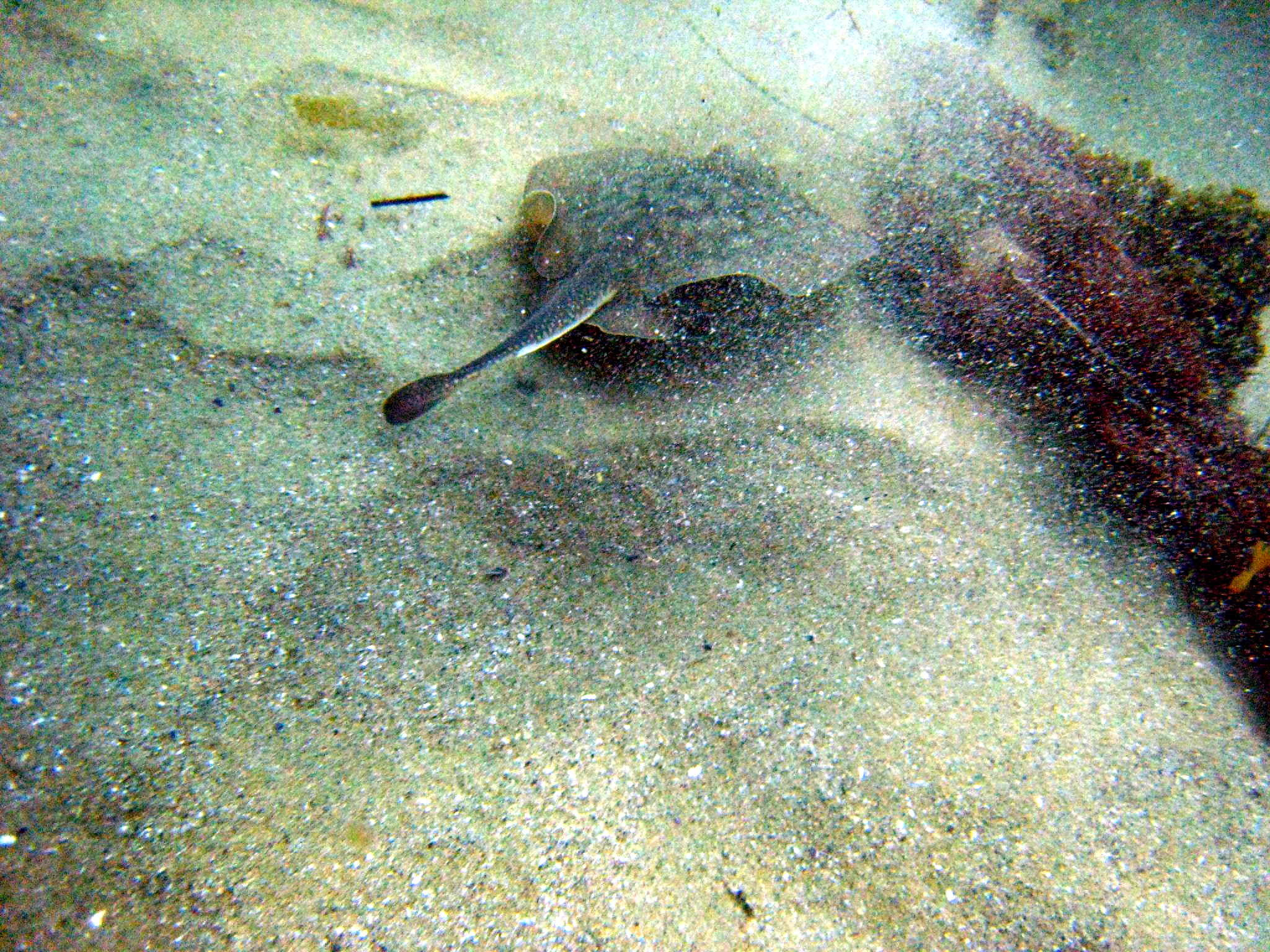
Santa Monica beachgoers face a heightened stingray risk this summer as sting incidents have doubled at Southern California beaches amid a persistent marine heat wave that scientists say extends prime ray habitat right to the local shoreline.
Lifeguard data reported Thursday, Aug. 13, shows Bolsa Chica State Beach and Huntington State Beach have recorded more than 3,100 stingray incidents so far in 2026, twice the total for all of 2025, according to the Associated Press. Huntington Beach's 3.5-mile shoreline alone has logged more than 2,000 stings, already surpassing last year's full count. San Diego beaches recorded more than 900 stings in the first half of 2026, more than during the same period in any of the previous five years.
No Santa Monica-specific sting data was available by publication time. The Santa Monica Wave has requested local figures from Santa Monica lifeguards.
Why it's happening
A persistent marine heat wave off the West Coast is the primary driver. The National Oceanic and Atmospheric Administration says this marks the third time on record that such a large section of coastal waters has stayed warm for so long. In June, officials confirmed the formation of an El Niño expected to grow to historic strength.
Bryan R. Etnyre, state park superintendent in northern Orange County, told the AP that ocean temperatures have stayed consistently in the 60s Fahrenheit. "I don't think there was a week all winter where we dropped below 60 this year," Etnyre said.
Chris Lowe, director of the Shark Lab at Cal State Long Beach, said round stingrays are a subtropical species thriving at the northern edge of their range because of climate change. Their habitat stretches from Panama to Santa Barbara County, placing Santa Monica squarely within it. Female rays favor warmer water for reproduction, while males seek food among invertebrates near the shoreline during summer months when their metabolism spikes.
Lowe added that predator loss has compounded the problem. Populations of sharks, sea lions and giant sea bass have declined in recent years, allowing stingray numbers to grow. In a typical year, Southern California lifeguards treat more than 10,000 stingray injuries, according to Spectrum News, and many more go unreported.
What Santa Monica beachgoers should know
Stingrays are most likely to sting on warm, calm days at low tide, in ankle- to knee-deep water where the rays forage and hide under sand. Stings typically hit the sides of the feet and toes. Beaches with active surf tend to see fewer incidents because wave action disrupts the sandy bottom where rays settle, but calm-water days remain a risk anywhere along the coast.
The best prevention is the "stingray shuffle." Slide your feet across the sand as you enter the water rather than stepping down. The vibration alerts nearby rays to move away before you step on them. Beachgoers should also check for posted signage warning of high stingray activity.
If you get stung
California State Parks advises soaking the affected area in hot fresh water between 104 and 113 degrees Fahrenheit for 30 to 90 minutes, or until pain subsides. The heat helps break down the venom. Do not apply alcohol, urine or ammonia to the wound.
Alert a lifeguard immediately. Most stings do not require further medical treatment, but seek emergency care if the wound is deep, bleeding heavily, showing signs of infection or triggering an allergic reaction. Dr. Christanne Coffey of UC San Diego Health has noted that redness and swelling persisting more than four or five days could indicate a retained barb or infection.
Several Southern California beaches now use smartphone apps to notify swimmers when multiple stings have been reported at a location. Lowe said he is working with television stations to develop a broader stingray advisory system.