A near-total lunar eclipse will turn the moon copper-red over Santa Monica on the night of Thursday, Aug. 27, and the Santa Monica College Planetarium is offering a crash course to help residents understand what they'll see.
Planetarium lecturer Sarah Vincent will present "Physics of Eclipses and Moon Phases" on Friday, Aug. 21, at 7 p.m. in Room MSB 126 of the Mathematics + Science Building at 1900 Pico Blvd., the Santa Monica Lookout reported. The 40-minute show, followed by an audience Q&A, explores why Earth is the only planet in the solar system whose moon can perfectly block the sun.
At 6 p.m. the same evening, Vincent opens with "The Night Sky Show," a virtual tour of upcoming celestial events projected on SMC's 4K Digistar system.
What's happening Aug. 27
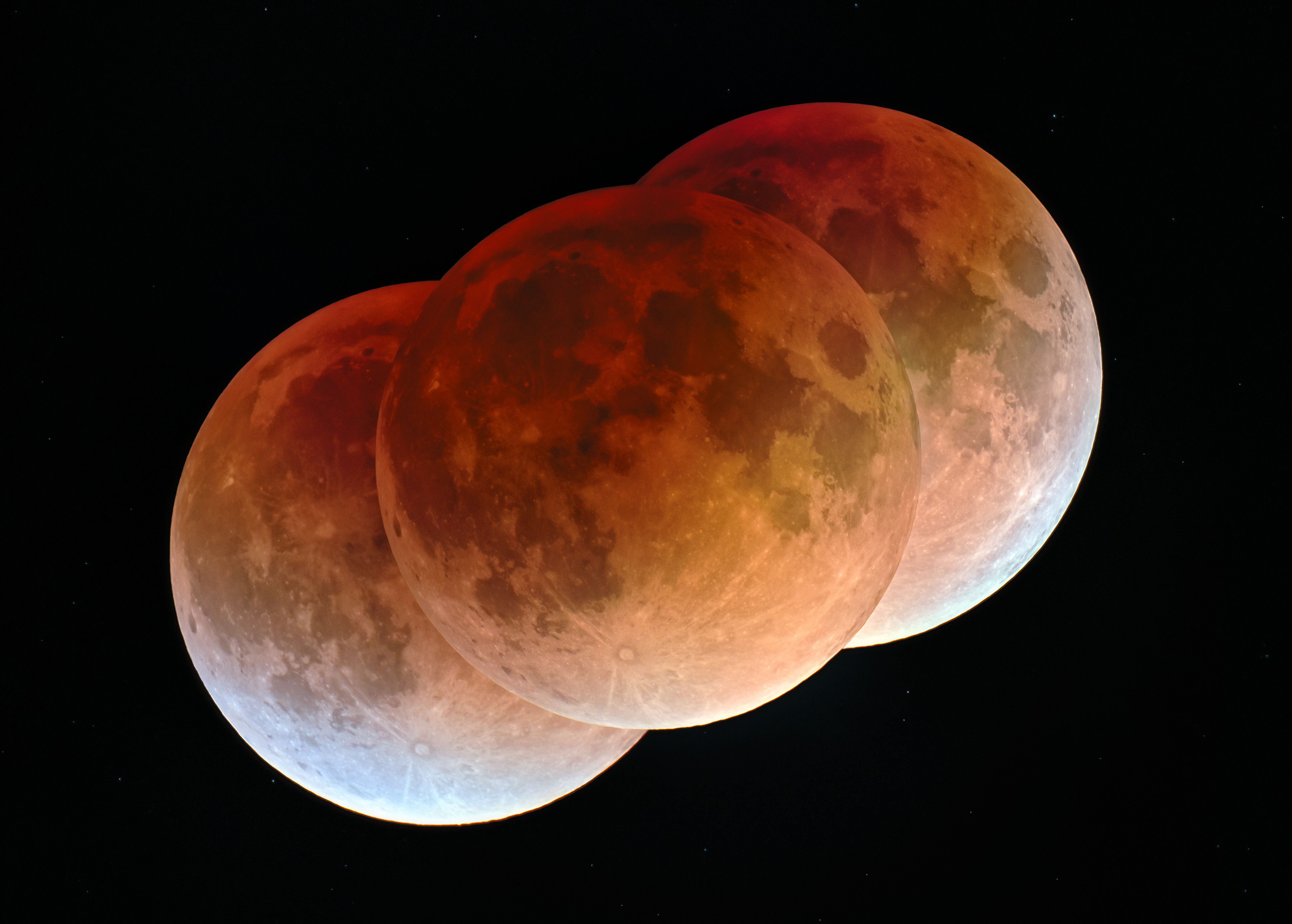
Earth's shadow will reach maximum coverage of about 96 percent of the moon's face at 9:12 p.m. PDT, according to the Old Farmer's Almanac. The partial phase lasts three hours and 18 minutes total. Only a thin bright sliver will remain along one edge of the lunar disc while the rest glows deep orange-copper, earning the event its colloquial "Blood Moon" nickname. NASA describes the color as a "rusty, coppery tint," The Hill reported.
The Telescope Advisor website called it "the year's biggest lunar event for North America," noting the moon will appear "deep orange-copper in color, with only a thin silver sliver of direct sunlight remaining along one limb of the lunar disc."
No special equipment is needed. Unlike a solar eclipse, a lunar eclipse is safe to watch with the naked eye, binoculars or any telescope without filters.
Tickets and logistics
Individual show tickets cost $10 for adults and $7 for children ages 3–12. A combo ticket covering both the 6 p.m. and 7 p.m. programs is $16 for adults and $10 for children. A $1-per-ticket service fee applies. Tickets are available at smc.edu/tickets.
No children under 3 are admitted to Friday evening shows. Free parking is available on the SMC main campus.
The following Friday, Aug. 28, the planetarium launches a new series, "Solar System Survey: Sun," exploring Earth's star. For more information, visit smc.edu/planetarium or call 310-434-4163.