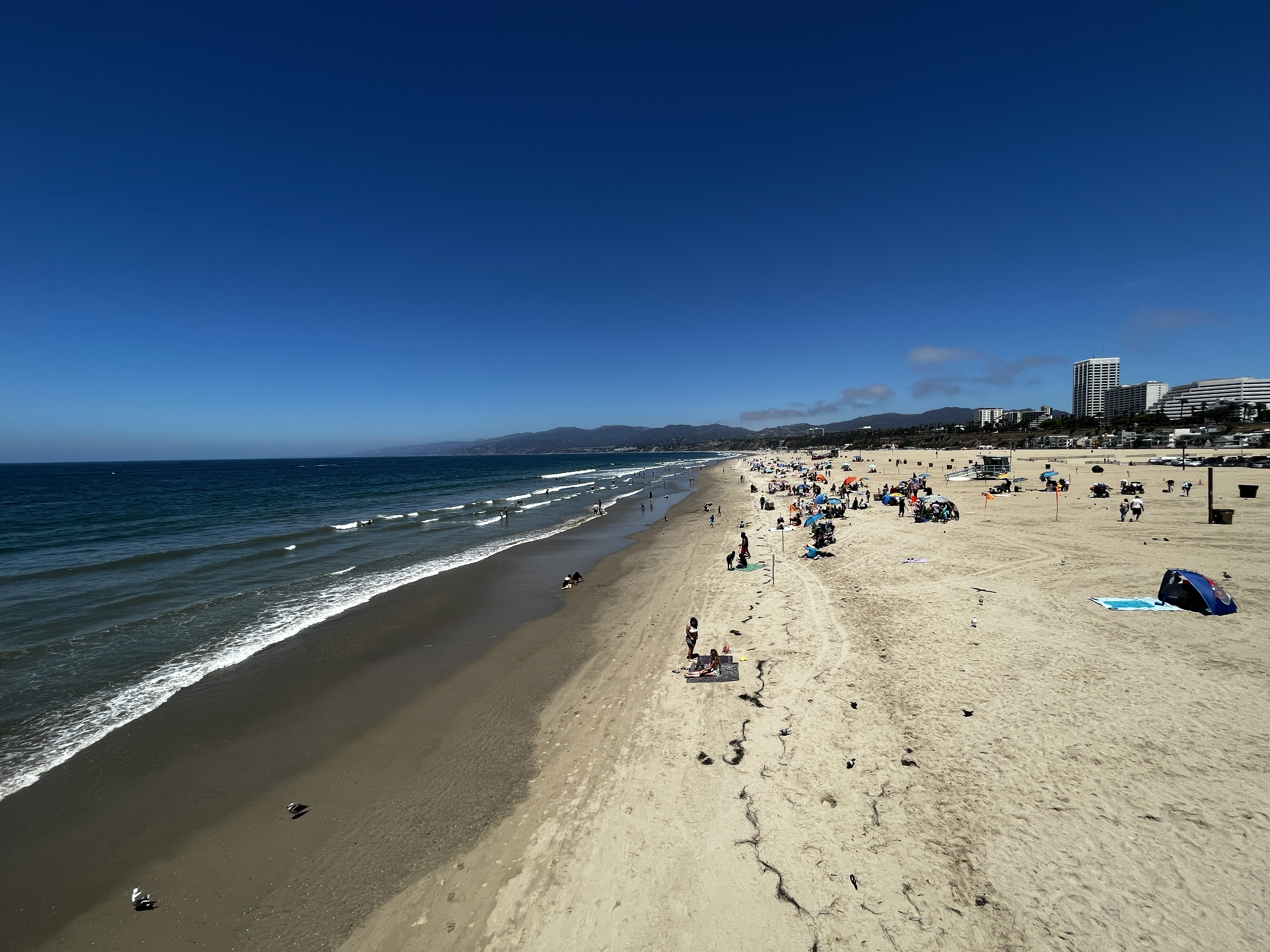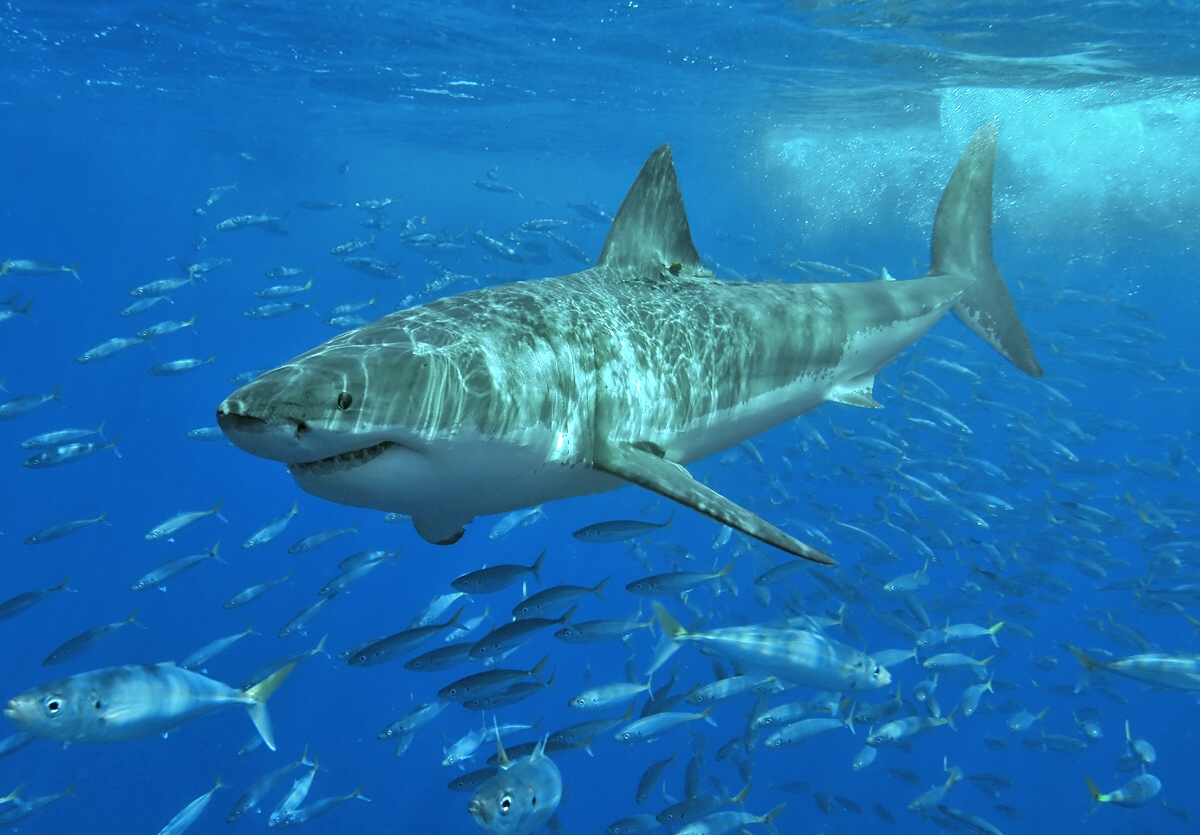
A solar-powered robot designed to detect great white sharks is being tested in Southern California waters, with Santa Monica Bay among its first patrol zones.
Cal State Long Beach's Shark Lab began ocean trials of the 10-foot-long, 3-foot-wide prototype in July, the Mercury News reported. The semi-autonomous craft can stay at sea for up to a week, using acoustic receivers to pick up signals from sharks fitted with scientific tracking tags. Onboard cameras record underwater activity, and the lab plans to add environmental DNA sampling and an aerial drone capable of streaming 360-degree video back to shore.
Santa Monica Bay, Long Beach Harbor and Huntington Beach are the initial deployment sites, according to Patch. When fully equipped, the robot would stream live data to the CSULB Shark Lab and participating lifeguards via Wi-Fi, giving them real-time information to guide beach safety decisions.
Shark Lab director Chris Lowe described the device as an information tool, not an alarm system.
"This is not about 'there's a shark in the water, let's pull everybody out,'" Lowe told the Mercury News on Aug. 3. "It's about giving people more information so they can make decisions for themselves."
Lowe said the robot is programmed to travel back and forth offshore in a pattern he compared to mowing a lawn. Lifeguards or researchers at the lab can steer it remotely.
The planned deployment comes amid heightened shark activity along the coast. L.A. County Lifeguards spokesperson Kealiinohopono "Pono" Barnes told the Los Angeles Times in April that Santa Monica Bay functions as a white shark nursery and that the department was preparing for increased shark activity this summer. Lowe told NBC Los Angeles he expected a particularly active shark season in Southern California this year, citing unusually warm water temperatures and baby white sharks appearing about a month earlier than typical.
The project is funded by a $300,000 grant from the Los Angeles-based Seaver Institute and built in collaboration with the Monterey Bay Aquarium Research Institute and New York University's Center for Robotics. Lowe said he hopes to have the finished version ready by 2028, when Olympic triathletes will swim in Long Beach Harbor.
Stanford marine sciences professor Barbara Block called the project a step forward but noted a limitation of the planned eDNA technology: shark DNA can persist in water for up to 72 hours, making it hard to tell whether a shark passed recently or days earlier.
The CSULB Shark Lab posted on Instagram on July 27 that the robot still needs significant research and development but described it as the future of shark monitoring.
No specific deployment date for Santa Monica Bay has been announced. Santa Monica's lifeguard division has not publicly commented on whether it will participate in the program.
Beachgoers who spot a shark can report it to L.A. County Lifeguards or call 911.