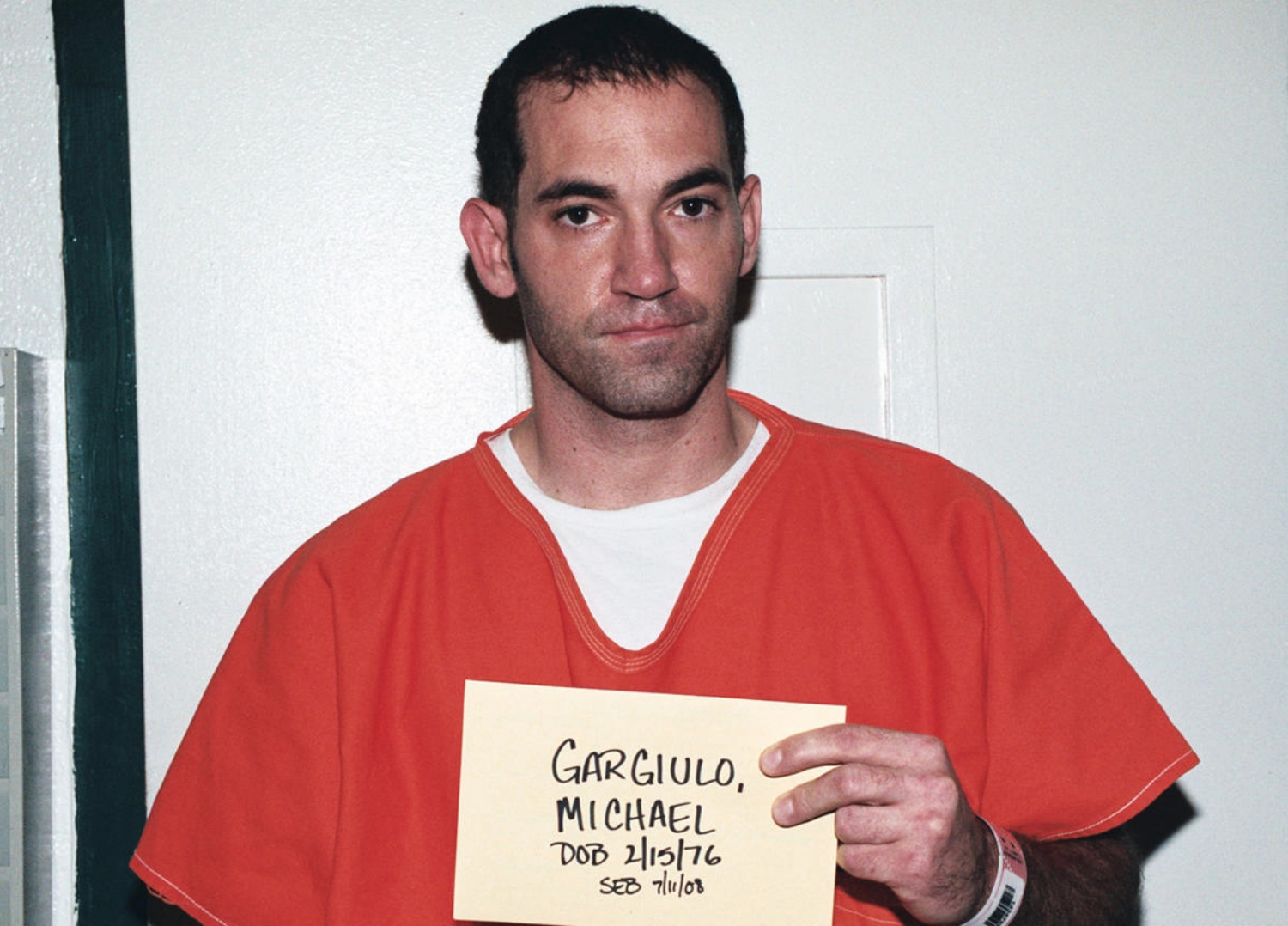
Gov. Gavin Newsom's plan to commute every California death sentence includes Michael Gargiulo, the serial killer who stabbed a woman inside her Santa Monica apartment in 2008.
Gargiulo, known as the "Hollywood Ripper," was sentenced to death in 2021 for murdering two Southern California women and attempting to kill a third. His surviving victim, Michelle Murphy, fought off the attack at her Santa Monica home on April 28, 2008, according to KTLA.
Newsom announced Nov. 5 that he would use his constitutional clemency power to commute all 548 death sentences in California to life in prison without the possibility of parole. If finalized, the action would be the largest mass commutation of death sentences in U.S. history, according to theDeath Penalty Information Center.
The commutations do not overturn convictions, grant pardons or make any inmate eligible for release, according to the governor's office.
Santa Monica connection
Murphy was 26 when Gargiulo, her neighbor, stabbed her at her Santa Monica home in 2008, according to the Los Angeles County District Attorney’s Office. Murphy fought him off, and Gargiulo cut himself during the struggle, leaving blood that investigators linked to him through DNA evidence.
The Santa Monica Police Department arrested Gargiulo on June 6, 2008. A jury convicted him on all counts in August 2019, and he was sentenced to death on July 16, 2021, KTLA reported.
Gargiulo also murdered 22-year-old Ashley Ellerin in her Hollywood Hills home in 2001 and 32-year-old Maria Bruno in El Monte in 2005, according to KTLA. He has faced a separate murder charge in Illinois in connection with the 1993 killing of teenager Tricia Pacaccio.
Not yet final
The commutations have not taken effect. Under California law, 382 cases involving inmates with multiple felony convictions require a recommendation from the state Supreme Court before the governor can act, KTLA reported.
In his open letter, Newsom wrote that he considered commuting only some sentences but concluded "that attempting to distinguish among crimes and offenders for clemency would inadvertently create two classes of murder victims."
Newsom also wrote that inmates with commuted sentences will not be eligible for new Board of Parole Hearings commutation and resentencing regulations, according to CalMatters.
Pushback from victims' groups
Anne Marie Schubert, chief executive of the Criminal Justice Legal Foundation and a former prosecutor, pledged to challenge the commutations in state Supreme Court, CalMatters reported. Schubert said victims' families were not notified of the proposed commutations.
Topo Padilla, president of Crime Victims United, told CalMatters: "I don't think he or any person should undo the sentence rendered by a jury and signed off by a judge because of his personal beliefs or feelings."
California has not carried out an execution since 2006. Newsom imposed a moratorium on executions in 2019. Gov.-elect Xavier Becerra has committed to extending that moratorium when he takes office, CalMatters reported.
Victims registered with the California Department of Corrections and Rehabilitation's Office of Victims and Survivor Rights and Services will be notified when commutations go into effect, according to the governor's clemency page. Unregistered victims can sign up at cdcr.ca.gov/victim-services.