Santa Monica's criminal diversion program for people experiencing homelessness has graduated 29 participants and dismissed 58 misdemeanor cases since launching in January 2024, the City Attorney's Office announced Monday, July 27.
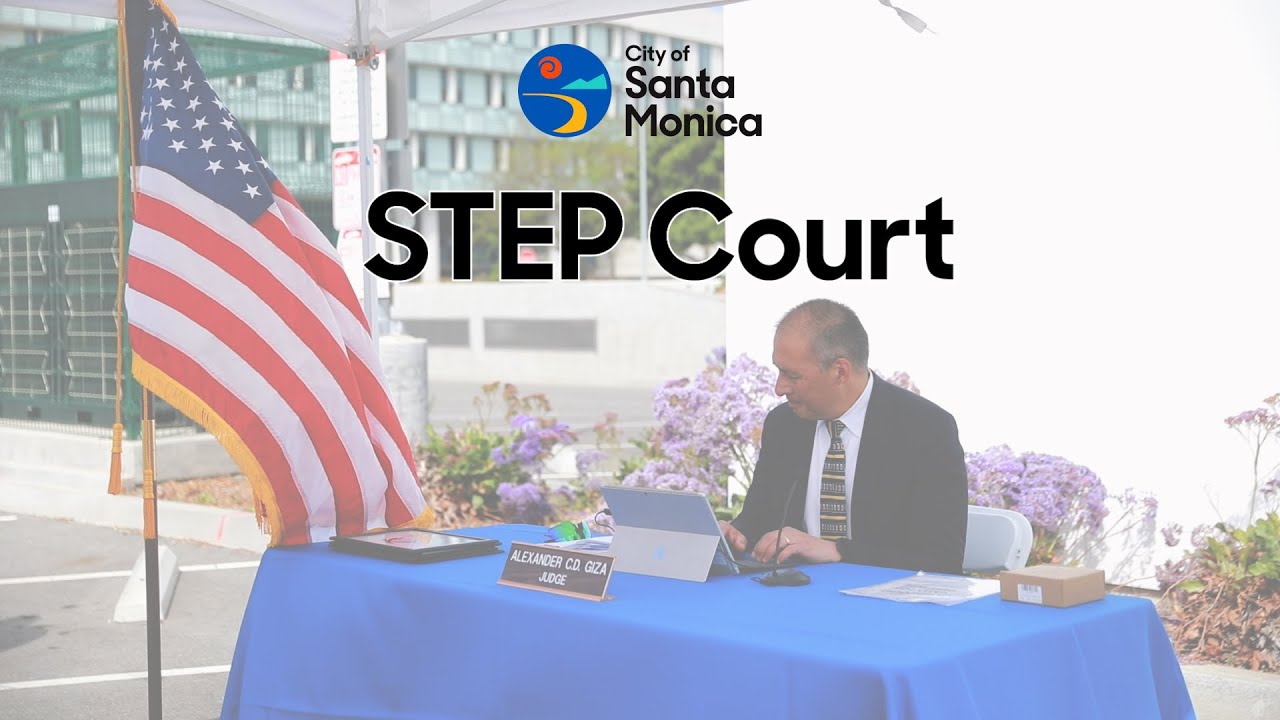
The Shelter, Treatment, and Empowerment Program, known as STEP Court, pairs justice-involved individuals with a case manager who builds a 90-day care plan tailored to their needs. Complete the plan, and the City Attorney drops the charges.
Referrals have surged over the past six months, according to City Attorney's Office staff, who credit the city's Realignment Plan and its stepped-up enforcement strategy for driving more people into the program rather than through traditional prosecution.
The program is a partnership between the City Attorney's Office, the Los Angeles County Superior Court, the LA County Public Defender's Office, the Los Angeles Sheriff's Department, and Exodus Recovery, a Culver City-based nonprofit that provides psychiatric and substance-use treatment across Southern California.
How it works
Each participant gets matched with a case manager who assesses housing, mental health, and substance-use needs, then maps out services over 90 days. Successful completion means the misdemeanor charges are dismissed outright. No jail time. No conviction.
Daniel, a 2025 graduate featured in a city video testimonial published Monday, July 27, said the program "helped me get connected to the right resources and people to get back on my feet. These people truly empathize with you."
Companion programs
STEP Court operates alongside SaMo Bridge, a 24-hour respite center that opened in April 2025 where police can bring people accused of minor offenses instead of booking them into jail. Since opening, SaMo Bridge has received 462 referrals, started 363 people on care coordination plans, and connected 233 participants to services, according to city data published by Santa Monica Next. The city said 81 percent of those individuals were immediately placed into housing or treatment.
Both programs sit under the city's Realignment Plan, which the City Council unanimously approved with $60 million in reserve funding aimed at public safety, capital improvements, and organizational capacity. The plan concentrates resources downtown, where 36 percent of crime calls and half of homeless-related calls originate, and expanded prosecutorial capacity to handle roughly 90 percent of fileable cases.
Santa Monica Housing and Human Services Director Aileen Reynolds, commenting on the city's broader homelessness strategy in a separate July 27 statement about the 2026 Point-in-Time Count, said the coordinated approach reflects "what a dedicated system of care can achieve when we meet people where they are and connect them to services right away."
The 2026 count found 718 people experiencing homelessness in Santa Monica, down 11.6 percent from 812 in 2025. The number of unsheltered individuals dropped 18.7 percent over the same period, according to the LAHSA count.
What's not yet clear
The City Attorney's Office has not specified which misdemeanor offenses qualify for STEP Court referral or detailed the referral pathway. No upcoming program review or expansion timeline has been announced.
Residents can learn more about STEP Court and the city's other diversion programs at santamonica.gov/topic-explainers/diversion-programs.