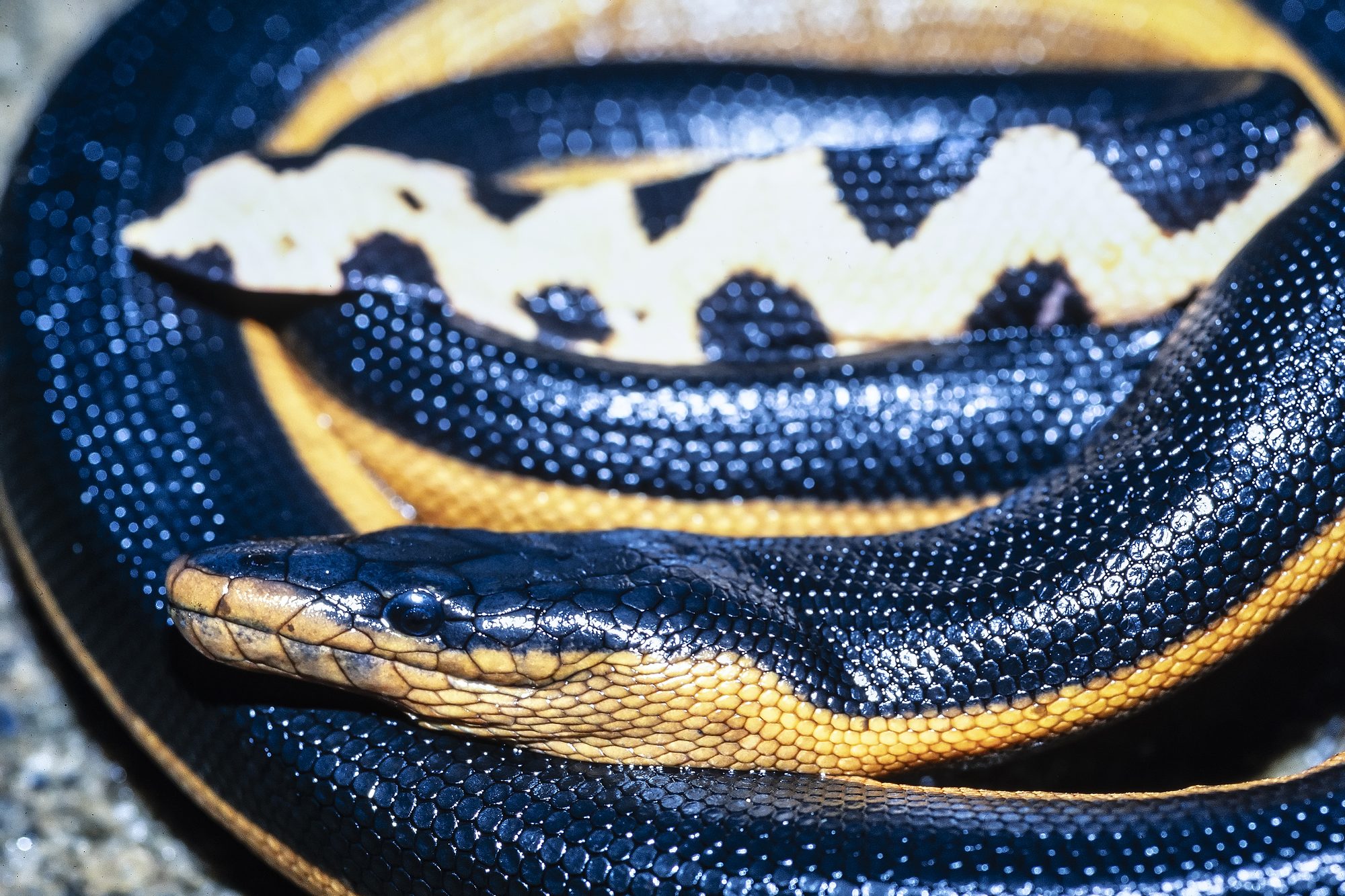
Yellow-bellied sea snakes, a highly venomous tropical species almost never seen in California, could drift toward Southern California shores as El Niño superheats the Pacific, scientists warned Wednesday, Aug. 26.
Douglas McCauley, director of the Benioff Ocean Initiative at UC Santa Barbara, said the warming pattern is reshaping what swims near local beaches. "Some of these kinds of interesting oddities that are never a part of California will become part of this temporarily tropical El Niño-heated California," McCauley told USA Today, as KTLA reported.
KTLA's report drew on a Surfer magazine article published Aug. 10 by Dashel Pierson. The yellow-bellied sea snake is described as the most widespread snake species on earth, according to the Waikiki Aquarium. It typically lives far south in the Pacific and Indian oceans.
Documented sightings in Southern California have been rare. One found in Newport Beach in 2018 was just the fifth recorded case since 1972, according to Surfer. Three earlier sightings occurred during the strong El Niño of 2015–2016.
The species carries potent neurotoxins and myotoxins, according to the Australian Museum. A bite can cause muscle pain, drooping eyelids, drowsiness and vomiting. In serious cases, paralysis and death are possible. The snake is considered docile, and victims recover without long-term effects if they receive antivenom, according to the Waikiki Aquarium.
The warning lands during a summer of unusual marine activity near Santa Monica. Water temperatures at Santa Monica Pier hit 76.8 degrees on July 25, the highest July reading ever recorded there, according to weather tracker Colin McCarthy of US Stormwatch. The Climate Prediction Center has issued an El Niño Advisory and forecasts the event will become very strong by fall and persist through winter 2026–27, according to the Santa Monica Observer.
A rare hammerhead shark was filmed near Malibu Pier on Aug. 13, roughly a football field from shore at Surfrider Beach. Nate Jaros, vice president of animal care for fish and invertebrates at the Aquarium of the Pacific, told KTLA on Aug. 13 that the near-shore appearance was unusual. "I thought it was a little peculiar to be so close to the pier," Jaros said.
Stingray injuries have also surged. Beachgoers were stung more than 3,100 times at Bolsa Chica and Huntington State beaches in 2026, twice the number recorded in 2025, according to lifeguard data cited by the Associated Press and reported by Gizmodo. Along San Diego beaches, over 900 stingray injuries were documented in the first half of 2026, more than those beaches reported in the first half of any of the past five years.
Los Angeles County lifeguards performed 1,950 ocean rescues over a single weekend in late July, while recording 71,274 preventative actions and providing medical aid to 517 people, according to the Westside Current.
If beachgoers spot an unfamiliar snake or marine animal along the shore, lifeguards advise keeping a safe distance and not touching or attempting to capture the creature. Reports from surfers, fishermen and beachgoers help lifeguards and wildlife officials track unusual species and determine whether warnings are needed.