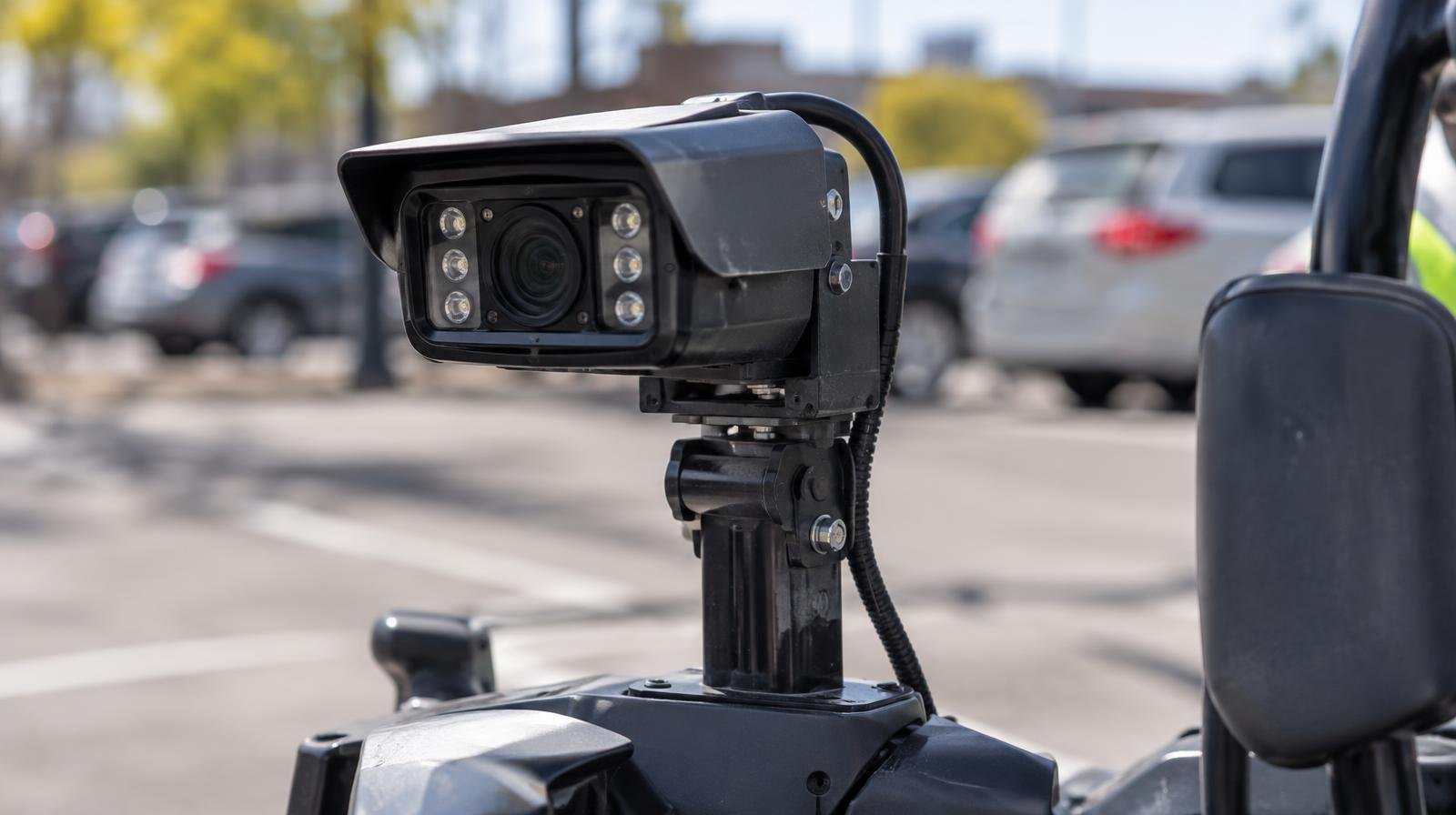
Santa Monica will mount license plate-scanning cameras on its parking enforcement scooters after the City Council approved a five-year, $700,000 contract with ComSonics Inc. on Oct. 13, as reported by Patch.
The Genetec AutoVu system will replace manual tire-chalking and dashboard receipt checks across 30 municipal lots and nearly 70% of the city's permit-regulated residential streets, according to a staff report from Police Chief Darrick Jacob.
The same cameras will also feed continuous data to the Santa Monica Police Department's Real-Time Crime Center, raising questions about the boundary between parking enforcement and police investigations.
The deal was approved as an exception to the city's competitive bidding process. Santa Monica piggybacked on a contract Seal Beach awarded ComSonics after a competitive solicitation in 2024, a move the staff report said gives other agencies access to the same pricing.
Of the $700,000 total, $600,000 is budgeted for fiscal year 2026-27. The remaining $100,000 for future years requires separate council budget approval.
What changes for drivers
Right now, traffic services officers walk through lots checking paper receipts on dashboards and chalk tires on time-limited streets. The new cameras, mounted on scooters, will electronically log plates and track how long vehicles stay parked.
The staff report said the technology will expand enforcement coverage without adding staff, freeing officers to focus on blocked bike lanes, obstructed crosswalks and double parking. The system also supports a future shift to digital residential permits and license plate-based payments.
Santa Monica operates 6,212 paid off-street parking spaces. The staff report cited the city's Vision Zero goals and growing demand for consistent enforcement as reasons for the upgrade.
Privacy rules and open questions
The city will own the data. ComSonics will store it under contract but cannot independently disclose it, according to the council presentation. License plate scans will be deleted after 30 days unless lawfully preserved. Citation records follow a separate retention schedule.
Parking enforcement staff face specific restrictions: no searching historical records unrelated to a citation, no broad neighborhood-wide plate searches and no issuing tickets retroactively. Every search will be logged and auditable under SMPD Policy 429.
The presentation states that future investigative access requires separate authorization. But the city's own documents do not fully explain how the Real-Time Crime Center will use the data or under what circumstances detectives could access it.
Broader ALPR debate
The vote adds a second layer of license plate reader technology in Santa Monica. The police department already operates 79 Flock Safety cameras throughout the city. The LAPD let its Flock contract lapse in July after an inspector general review found excessive error rates and insufficient data privacy safeguards, the Westside Current reported in September.
SMPD said its Flock program was materially different from LAPD's. The department conducted two audits and found no instances of ALPR data being shared with federal agencies, according to the Westside Current.
Councilmember Lana Negrete told the Westside Current in September that she takes "privacy and misuse concerns seriously" but believes "the answer is strong policy, oversight and accountability, not abandoning useful technology." Her comments addressed the Flock contract, not the newly approved Genetec system.
A California Senate bill that would have strengthened ALPR privacy protections failed on Sept. 7. It was the fifth consecutive year such legislation stalled, the Westside Current reported.
The city has not announced a deployment date for the new system.