Santa Monica's City Council voted 6-0 on Tuesday, June 9, to accept a $2 million federal grant for a feasibility study on building "cap parks" over the I-10 freeway through the Pico neighborhood. The study marks a first step toward reconnecting a community split by highway construction more than 60 years ago.
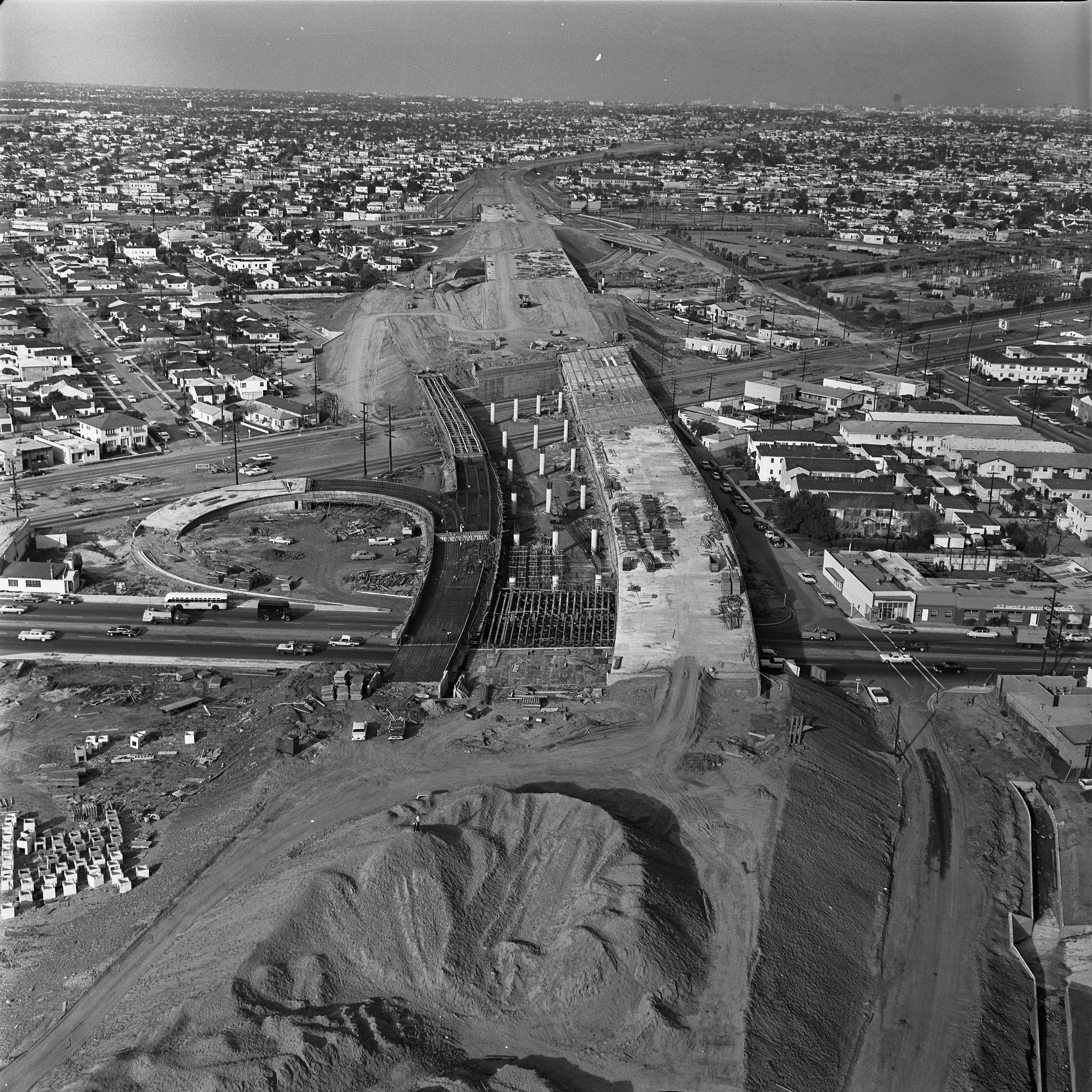
The I-10 cut through the Pico neighborhood in the 1960s, displacing more than 600 predominantly Black families — over 1,500 residents total — according to the Los Angeles Times and city grant documents. Civic boosters had pushed for Santa Monica to be the freeway's western terminus, but business interests steered the route through Pico, where property values were lower due to government-backed redlining, the Times reported.
The neighborhood remains Santa Monica's most ethnically diverse area, but fewer Black residents live in the city than in 1960. Black residents make up roughly 5% of the population.
What it costs Santa Monica
The grant, from the U.S. Department of Transportation's Reconnecting Communities Pilot Program, requires a local match of $505,712. The city will cover that with $190,240 in staff time and $315,472 from Park and Recreation Development Impact Fee revenues, according to council records. No general fund dollars are involved.
Caltrans serves as the pass-through agency delivering the federal funds. The grant was already awarded and is unaffected by the federal program's closure to new applicants.
What the study covers
The planning effort will examine cap parks along the I-10 between 11th and 20th streets, as well as alternatives including full or partial removal of the freeway. It unfolds in five phases: an existing conditions analysis reviewing environmental and health impacts and air-rights issues; community outreach engaging the Pico Neighborhood Association and families displaced by the original construction; concept development with cost-benefit analyses and funding strategies; pre-development coordination with Caltrans on permits; and a final report with recommendations, cost estimates, and implementation timelines.
This is a planning-only effort. Any actual construction would require separate funding and a future capital grant process.
What council members said
Councilmember Ellis Raskin made the motion, seconded by Councilmember Natalya Zernitskaya Snell, directing staff to examine trade-offs between capping and freeway removal and to follow models of cities that have removed freeways. The council also directed that community engagement include the Pico Neighborhood Association and those previously displaced.
Mayor Phil Torosis and Councilmembers Negrete, Hall, Raskin, Snell, and Zernitskaya voted yes. Mayor Pro Tem Zwick was absent.
What's next
Consultant selection is scheduled for spring 2027, per the grant timeline. The final report is due Thursday, July 31, 2029, with the grant budget period closing in January 2030. The vote was adopted as Resolution No. 11765.
Cap parks elsewhere have generated significant economic activity. Dallas's Klyde Warren Park, a 5.2-acre deck over the Woodall Rodgers Freeway opened in 2012, has generated an estimated $2.5 billion in economic impact, according to a Federal Highway Administration profile. Santa Monica's study will include its own cost-benefit analysis as part of the concept development phase.
Nichelle Monroe, a descendant of a displaced Pico family, told the Times in 2021: "If you had something and you lost it due to eminent domain, due to racism, you're thinking about it and it affects your every move thereafter."