Santa Monica could get red-light cameras and a new traffic-safety framework after the City Council takes up two staff proposals on Tuesday, Sept. 8.
One item asks the council to adopt a seven-element "Safe System" framework and a neighborhood traffic-calming toolkit. The other introduces an ordinance that would place automated red-light cameras at two intersections, the city's first.
The proposals land a decade after Santa Monica pledged to eliminate fatal and severe-injury crashes by 2026 under its Vision Zero program.
The city fell short.
Fatal and severe-injury crashes dropped from 62 in 2024 to 52 in 2025, according to crash data cited in the staff report and detailed in a Santa Monica Next column by UCLA transportation researcher Juan Matute. But pedestrian-involved crashes rose every year from 2021 to 2025, and pedestrians and cyclists accounted for 20 of the city's 21 traffic deaths over that five-year span.
No single intersection recorded more than three fatal or severe-injury crashes during that period. Ocean Avenue and Santa Monica Boulevard each logged 26 such crashes citywide, spreading the problem across the grid rather than concentrating it at a few corners.
New framework, new tools
The Safe System framework would replace the city's old five-category model of engineering, education, encouragement, enforcement and evaluation. The new version adds two elements, Safe Land Use and Safe and Viable Transit, joining Safe Speeds, Safe Roads, Safe Road Users, Safe Vehicles, and Post-Crash Care and Learning.
Staff is also proposing a Neighborhood Traffic Calming Toolkit that would give residents a structured path to request improvements such as curb extensions, speed humps and diverters. Diverters that fit an already-approved program would go through administrative review. New or nonstandard proposals would need documented support from 51% of residents and businesses in areas zoned mostly R-1, or 25% in areas with more mixed zoning, according to a staff report filed by the Public Works and Mobility department.
Red-light cameras
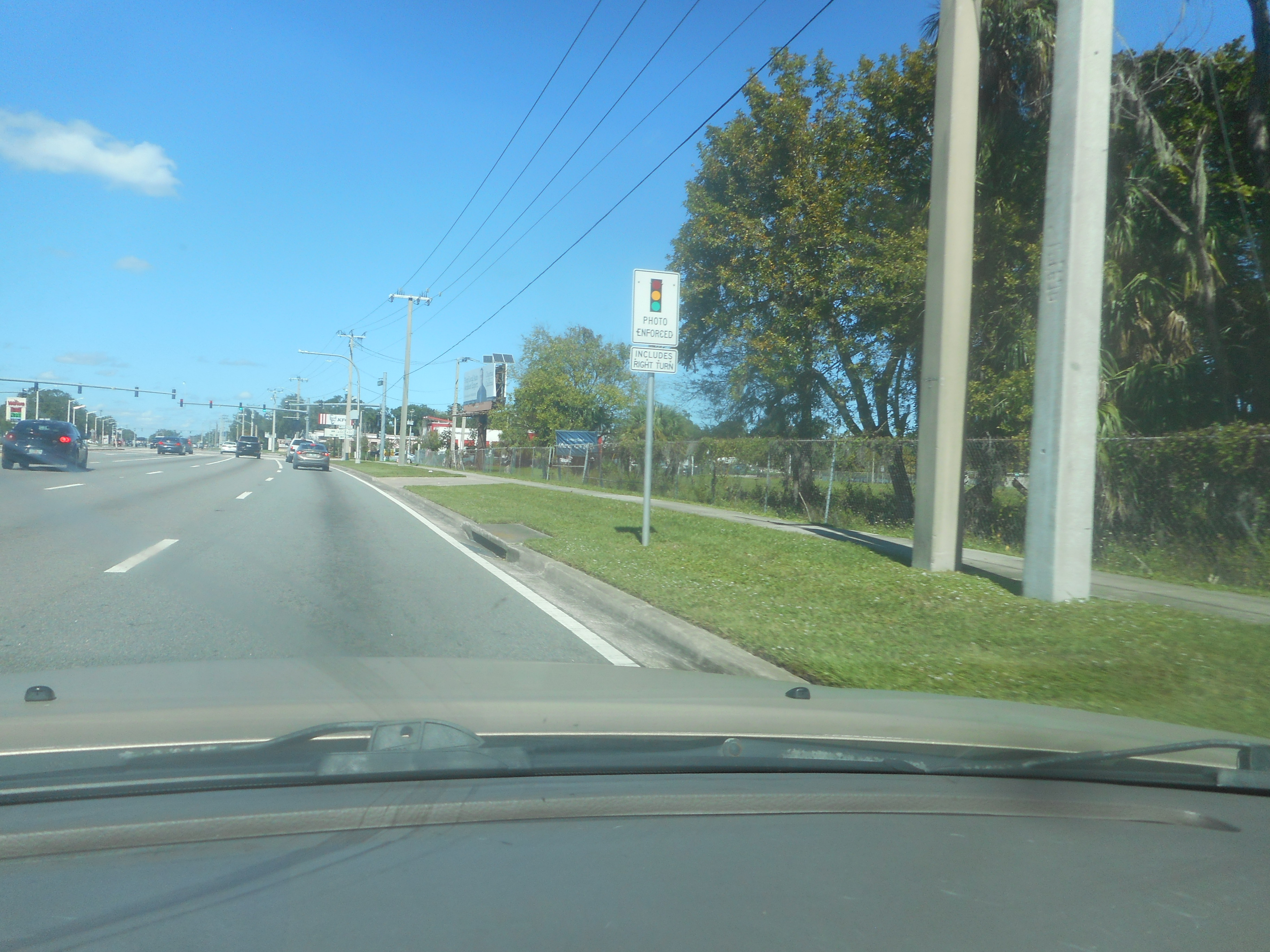
A separate ordinance would create an Automated Traffic Enforcement System, or ATES, program at two intersections. The program is authorized under California Vehicle Code Section 21455.9, enacted through SB 720, which lets cities enforce red-light violations through a civil process.
Fines would start at $100 for a first violation and rise to $500 by a fourth, plus a $50 late fee. Violations would be civil, not criminal, and tied to the vehicle's registered owner. Revenue from the fines would go toward local roadway safety improvements rather than the general fund, according to Matute's column.
Matute, a member of the McKinley Elementary School PTA Traffic Safety Committee, wrote that the staff report is honest about why the city missed its zero-fatality target and presents a credible path forward. On the cameras, he argued that deterrence depends on the likelihood of getting caught. "A camera catches almost everyone who runs the light," he wrote. "When the odds of getting caught go up that much, the fine doesn't need to be as high to have the same effect."
The council directed staff on Feb. 10 to prioritize human life over vehicle throughput in street design. Tuesday's session does not include a budget request. Staff said it is still evaluating procurement options for the camera system and will return to the council with a vendor recommendation at a future meeting.
The ATES ordinance requires a second reading before it can take effect. The two specific intersections where cameras would be installed have not been publicly identified.