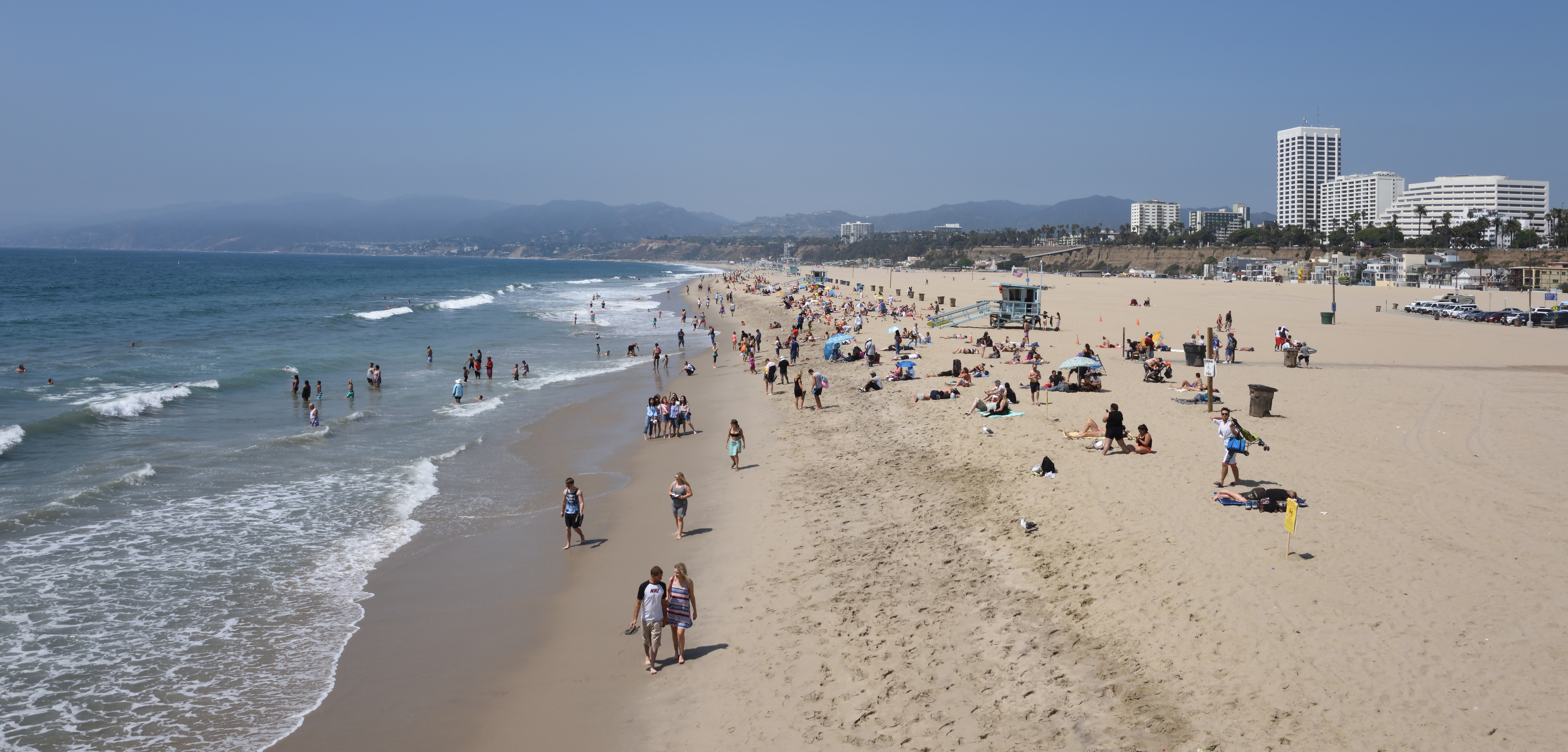
Ocean temperatures in Santa Monica Bay have averaged about 74.3°F to start October, the warmest in data going back to 1982.
The Los Angeles County Fire Department Lifeguard Division posted the findings on X on Oct. 9, citing nearby buoy readings. The division said the warm ocean water trend seen through summer has carried into fall, with NOAA and the National Weather Service reporting that El Niño continues to strengthen.
The numbers keep climbing.
The record readings arrived the same weekend Tropical Storm Rachel hit Southern California with flooding and high surf. Rachel was downgraded to a post-tropical storm on Sunday, Oct. 11, after causing flooding and damage across the region, NPR reported. A coastal flood warning covered the Malibu coast and Los Angeles County beaches through the weekend, and the National Hurricane Center said water levels were running as much as 1.5 feet above predictions in some areas.
The warm water is not new to Santa Monica. On July 25, the pier recorded 76.8°F, the highest July reading ever at the landmark, according to weather tracker Colin McCarthy of US Stormwatch, as reported by the Santa Monica Observer.
The pattern stretches beyond the bay. Scripps Pier in La Jolla logged 42 days of record-high water temperatures in 2026 through late September, according to Fox 5 San Diego. Scientists at Scripps Institution of Oceanography said they have never seen anything like this year's warm-water trend along the Southern California coast, and warned it can disrupt the ocean's biosphere by killing off seaweed and other organisms, Spectrum News reported.
The warm water has also drawn tropical marine species northward. An Olive ridley sea turtle nested on a U.S. West Coast beach near Seal Beach for the first time ever, and hammerhead sharks were spotted near Malibu Pier, Fox 5 reported.
Brett Sanders, Chancellor's Professor of Civil and Environmental Engineering at UC Irvine, said in a Sept. 17 ABC News report on El Niño-fueled coastal erosion that sea levels have been about six inches higher than normal since March. "This is likely to be the most stressful winter we have had in a number of years in terms of waves," Sanders said.
NOAA's Sept. 14 update put the chance of a very strong El Niño event during fall and early winter 2026–27 at greater than 90%. The Lifeguard Division urged beachgoers to check NOAA for current data and to check in with a lifeguard before entering the water.