Santa Monica can no longer count on international tourists to fill its budget gaps, Councilmember Dan Hall warned in a special-edition newsletter published Monday, July 6, calling on the city to diversify its economy even as it prepares for the FIFA World Cup and 2028 Olympics.
Hall, who drew on data from Santa Monica Travel and Tourism's 17th Annual Tourism Summit, wrote that international tourism "remains below historic levels and is unlikely to fully rebound in the near future because of global economic uncertainty, changing travel patterns, and federal policies affecting international visitors."
International visitors have historically accounted for roughly half of Santa Monica's visitor economy, the Los Angeles Business Journal has reported. With that pipeline constricted, the city's finances have taken a hit: sales tax revenue dropped 6% and hotel tax fell 10% during the 2024-25 fiscal year, contributing to an estimated $29.1 million annual deficit. Cash reserves have fallen from roughly $436 million in fiscal 2018 to approximately $150 million. Retail vacancy sits around 16%, the highest in decades, and office vacancy hovers near 35%.
The city's FY 2025-27 adopted biennial budget attributes the tourism downturn in part to "the antagonistic policies put in place by the Trump administration and the potential substantial rise in cost of goods and services caused by tariffs and uncertain trade policies."
City Manager Oliver Chi put it bluntly in an interview with the Los Angeles Business Journal: "When you couple that with what's happening at the federal government level, and folks just don't want to travel to the U.S. right now internationally, all of that creates an environment that's challenging."
What the city is doing
Hall pointed to a series of Council actions already underway. In March 2026, the Council approved a Realignment Plan Update that included a $3 million economic development fund, waivers for restaurant fees, an expanded entertainment zone, discounted downtown parking, and temporary relief of film permit fees, according to the Los Angeles Business Journal.
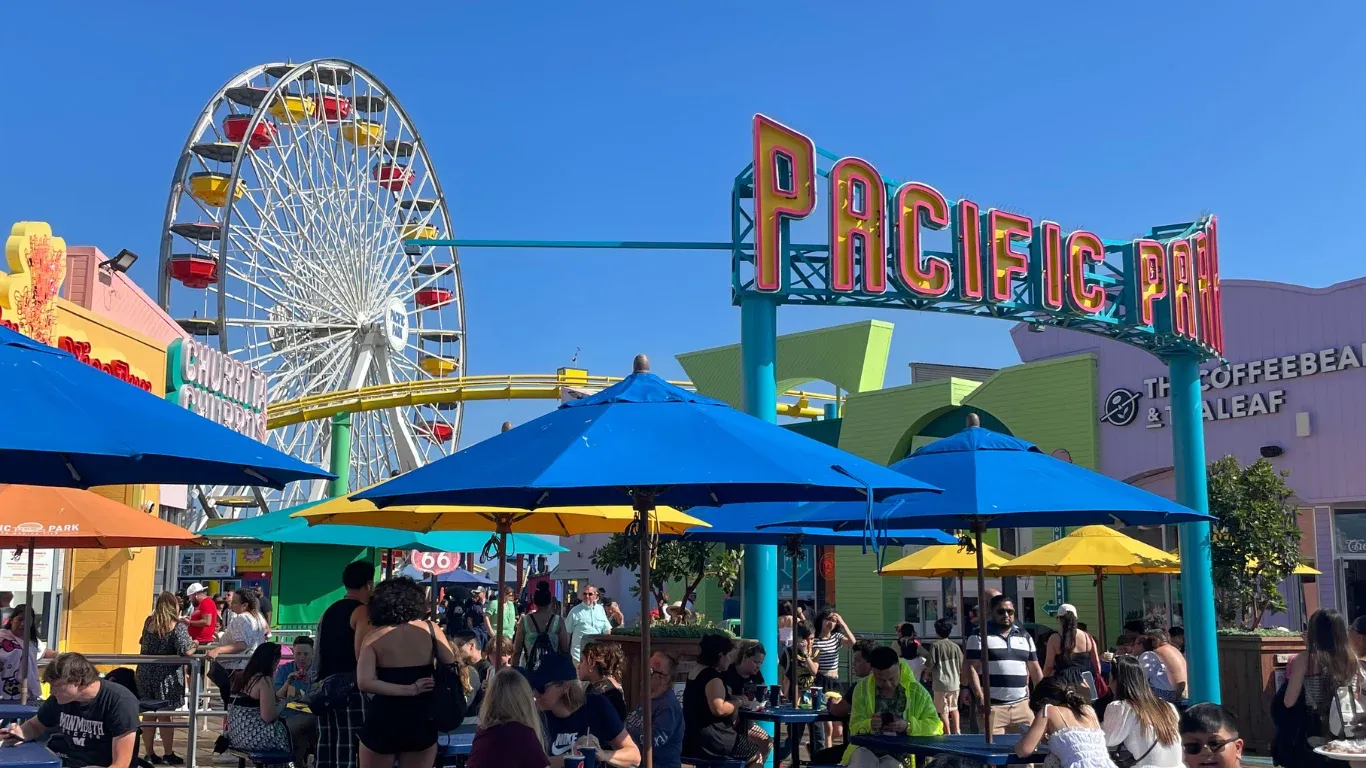
On Tuesday, April 14, the Council adopted Ordinance No. 2851, establishing entertainment zones in the downtown core, on portions of the Santa Monica Pier, and along Main Street and Montana Avenue. The same night, the Council authorized license agreements for a World Cup fan festival at the Pier in June 2026, a Goldenvoice music festival on Santa Monica Beach in September 2026, and a Nations Village at Crescent Bay Park during the 2028 Olympics.
Permit turnaround times are 40% faster since October 2025, aided by a pilot of AI-enabled plan-check software, according to the Los Angeles Business Journal. The city has eliminated permit requirements for basic outdoor dining.
Eyes on the Olympics
Hall has repeatedly pressed the fiscal issue publicly. At the Tuesday, March 24 Council meeting, he pulled the Annual Comprehensive Financial Report from the consent calendar to ask staff why tourism matters so much to city finances and whether the Realignment Plan would prevent sudden cuts to services.
A study released in October 2025 found that hosting Olympic beach volleyball would have cost the city a net $1.45 million. Santa Monica declined to host. But city officials still project roughly $10 million in tourism revenue from the Games, according to the Los Angeles Times, and the city is positioning itself as a regional hub with the Nations Village and an International Olympic Committee broadcast center at Crescent Bay Park.
Hall stressed that the World Cup and Olympics alone won't solve the problem. "Long-term success will depend on creating experiences that encourage people to return long after those events have ended," he wrote.
Residents can sign up for Council agenda notifications and submit public comment at santamonica.gov.